Behind the Quote
The Planning Engine
Every quote on the platform runs through our planner. It tries every sheet size on every machine with every imposition, checks the finishing path, and returns the lowest-cost plan that actually runs — usually in about a second.
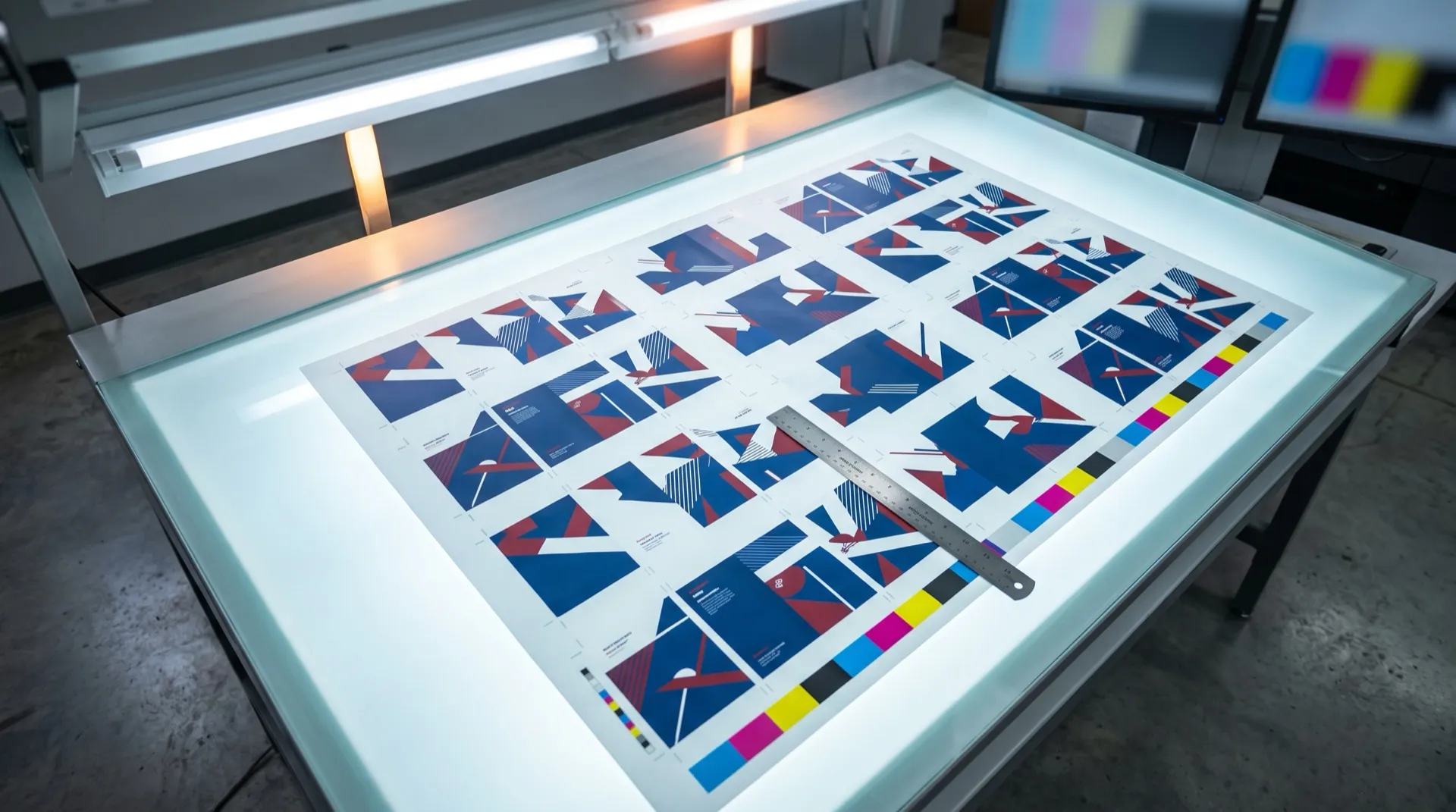
What it considers
The planner takes every fact about the job and every constraint about the shop. Partial list:
- Every sheet size available for the specified paper, from every supplier we stock.
- Every machine in the shop and what each one can actually run — size, plates, coatings, dies, ink limits.
- Every imposition that fits, including work-and-turn vs. sheetwork tradeoffs, evaluated independently for cost.
- Material constraints A C1S sheet can't be work-and-turned — the back is uncoated. Toner and aqueous coating don't bond, so a job that needs AQ won't get routed to digital. Heavy stocks crack on a fold without scoring; the planner inserts a digital crease pass when the geometry calls for it. Bad chemistry, bad geometry — neither gets proposed.
- Grain direction tracked across cutting, folding, and binding. Mix grain, lock a direction, or enforce grain-long / grain-short — the planner respects the choice end-to-end.
- Finishing capacity minimum and maximum sheet size on every cutter, folder, binder, and die station downstream. A press layout that can't be finished doesn't get proposed.
- Material procurement whether the paper is on the floor or needs to be ordered, and what that does to the lead time.
What it produces
Each plan the engine returns includes:
- Imposition layout exact press sheet with bleeds and gripper margins.
- Paper procurement plan sheet size, quantity, supplier, lead time.
- Machine routing which presses run the job and in what order.
- Per-piece weight calculated from stock and count.
- Cartonization pieces per carton, weight per carton, total carton count.
- Run time and cost broken down by station, ready for the quote.
About one second per plan — millions of calculations distributed across multiple CPUs on a fully private, encrypted, and authenticated platform that scales on demand. We run it on every quote, every reorder, and every spec change.
From quote to press
By the time you upload artwork, the planner has already done the heavy lifting — imposition determined, machine selected, paper reserved. The rest is waiting for you to commit.
When you do, preflight runs automatically. Common issues are fixed inline; files that need human eyes get flagged and reviewed the old-fashioned way — no penalty, no surcharge. Most clean files come back with a proof in 1–5 minutes.
Once you approve the proof, the job is imposed and routed to the press the planner already chose. No estimator handoff. No phone tag with the production floor. The plan was authoritative the moment the quote was generated, so every step downstream just executes against it.
Built in-house
Imageworks has run an automated planner since 2012. The current engine, released February 2026, is a full rewrite — same problem, sharper solution, fourteen years of edge cases on the floor folded back into the design.
Adaptability was the goal. Add a press, the engine picks it up. Add a stock, it gets considered on the next quote. Add a carton size, it's already in rotation. The aim was to encode estimating decisions the way a 30-year veteran of the floor would make them — in code, every time, without drift.
Price your custom job in minutes.
Create a free account and quote it yourself — quoting unlocks as soon as your email is verified. Already registered? Log in.
Next
Automated Prepress →
Files checked, repaired, and imposed by software the moment they land.